


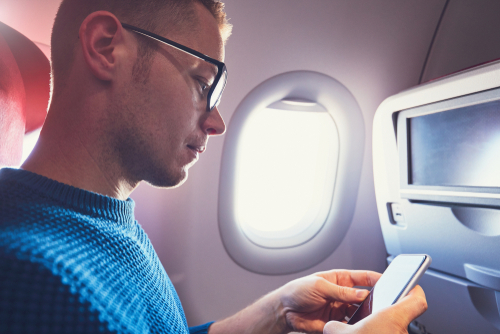
The promise of free in-flight Wi-Fi sounds pretty sweet if you’re tired of paying extra just to scroll through your phone at 35,000 feet. T-Mobile has made this perk a centerpiece of its customer pitch, suggesting it saves you serious cash compared to what Verizon is charging. But a regulatory body just tapped the brakes on how those claims are being made.
According to a recent report from the National Advertising Division (NAD), the watchdog group that polices advertising claims across the industry, T-Mobile needs to rethink how it’s promoting its free in-flight Wi-Fi benefit. The issue started when Verizon challenged T-Mobile’s savings calculator, which was telling customers they could save $147 per month by switching from Verizon to T-Mobile just for in-flight internet access.
After reviewing the evidence, the NAD basically said T-Mobile’s math doesn’t add up. The real issue is that the savings calculator was overstating what the average Verizon customer actually pays for in-flight connectivity, and it wasn’t being clear about which airlines actually offer the free T-Mobile benefit. The regulator is asking T-Mobile to either pull these ads or change them substantially to be more honest with potential customers.
For regular travelers, this situation highlights something important about how companies market themselves. When you see a shiny calculator on a website promising you’ll save hundreds of dollars a month, it’s worth digging deeper.
While T-Mobile genuinely does offer free in-flight Wi-Fi and Verizon doesn’t have a direct equivalent, the actual savings difference isn’t nearly as dramatic as the ads made it seem. It’s a reminder that even when a company has a real advantage, the way they advertise that advantage matters.