


T-Mobile’s top technology executive is painting a bold picture of the wireless industry’s next chapter, and it’s not just about faster speeds. As shared by the Un-carrier, the company believes the real revolution happening right now involves artificial intelligence moving out of the digital world and into the physical one.
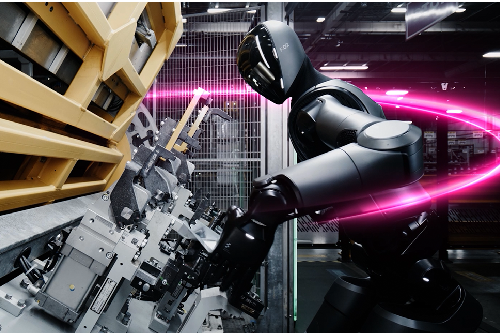
This shift has massive implications for how networks operate. Right now, AI systems like ChatGPT excel at generating text and images—digital work. But Physical AI is different. It’s about machines that can see, think and act in the real world. Think autonomous delivery robots navigating sidewalks, factories where equipment fixes itself before it breaks, or cities that adapt traffic flow in real time based on current conditions. All of these systems depend on networks that can communicate in microseconds, not milliseconds.
T-Mobile’s vision hinges on a concept they call “kinetic tokens”—essentially data that doesn’t just tell you about something, but actually makes something happen. If informational tokens are like a weather forecast, kinetic tokens are like weather-responsive systems that automatically close shutters and adjust heating. This demands something different from networks than what currently exists.
The economics are staggering. While artificial intelligence in the digital world could generate three to five trillion dollars annually, adding intelligence to the physical world (robots in factories, autonomous vehicles, smart infrastructure) could unlock tens of trillions. That’s not hyperbole; it’s the economic opportunity T-Mobile believes exists.
Here’s where wireless companies suddenly matter in a whole new way. Telecom networks have always been about connecting people across distance. But in this Physical AI future, networks become the actual nervous system of automated machines. A robot in a warehouse can’t rely on sending data to a distant cloud server and waiting for an answer (that takes too long). It needs to make decisions on the spot, often coordinating with other machines nearby. The network has to be fast, reliable, and smart about where thinking actually happens.
T-Mobile is building toward something called AI-RAN, which sounds technical but is really about networks learning to do two jobs simultaneously: handle regular cell phone and internet traffic while also supporting AI systems. The company is already demonstrating this works. In recent tests, T-Mobile worked with equipment makers Nokia and Ericsson to show that AI applications and traditional network functions can run on the same hardware without either one suffering.
The next generation of wireless, known as 6G, is being designed from the ground up with this in mind. Unlike previous upgrades that just made things faster, 6G is being engineered to make the network itself intelligent. One key capability is something called Integrated Sensing and Communications—basically, the network doesn’t just move data, it also senses what’s happening in the physical world around it.
T-Mobile executives argue the timing is crucial. Right now, while 6G standards are still being written, the company can influence how intelligence gets built into the network architecture from day one. Rather than bolting on AI capabilities later, they’re designing networks where AI is woven into the fabric from the beginning.
The company isn’t making vague promises here. They’ve established an AI-RAN Innovation Center in Bellevue, Washington, where teams are actually testing these concepts with real equipment, real radios, and real network spectrum. It’s not theoretical—it’s engineering.
What T-Mobile is really saying is that the companies that control the networks between you and everything else (autonomous cars, smart factories, connected cities) will play a central role in the AI revolution. The wireless carriers aren’t just pipes for data anymore. They’re becoming the backbone that makes intelligent machines work together.